Custom Energy Saving Speed Reducer Gear Box for Servo Motor
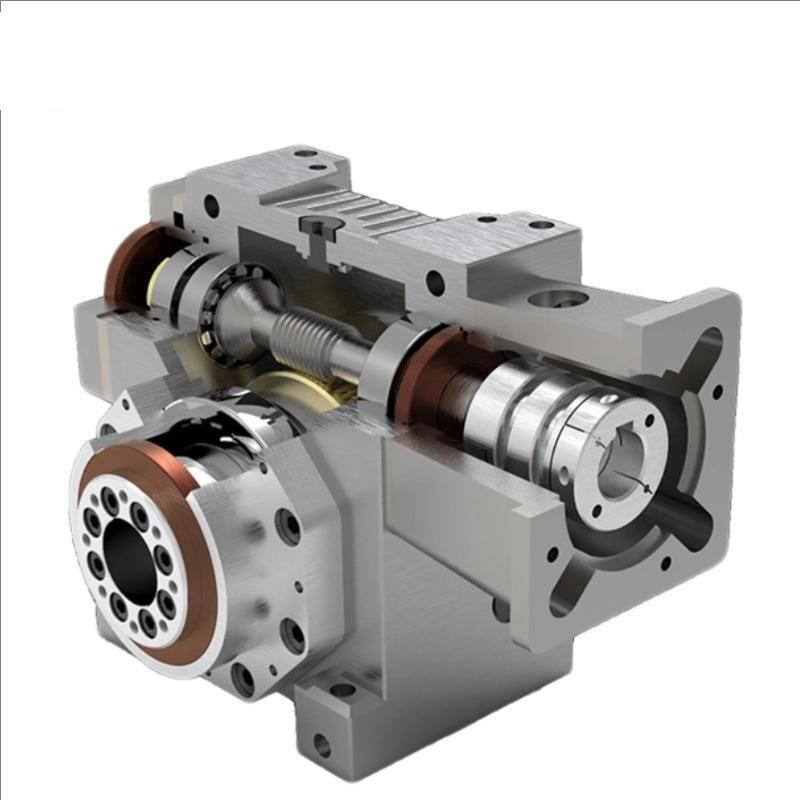
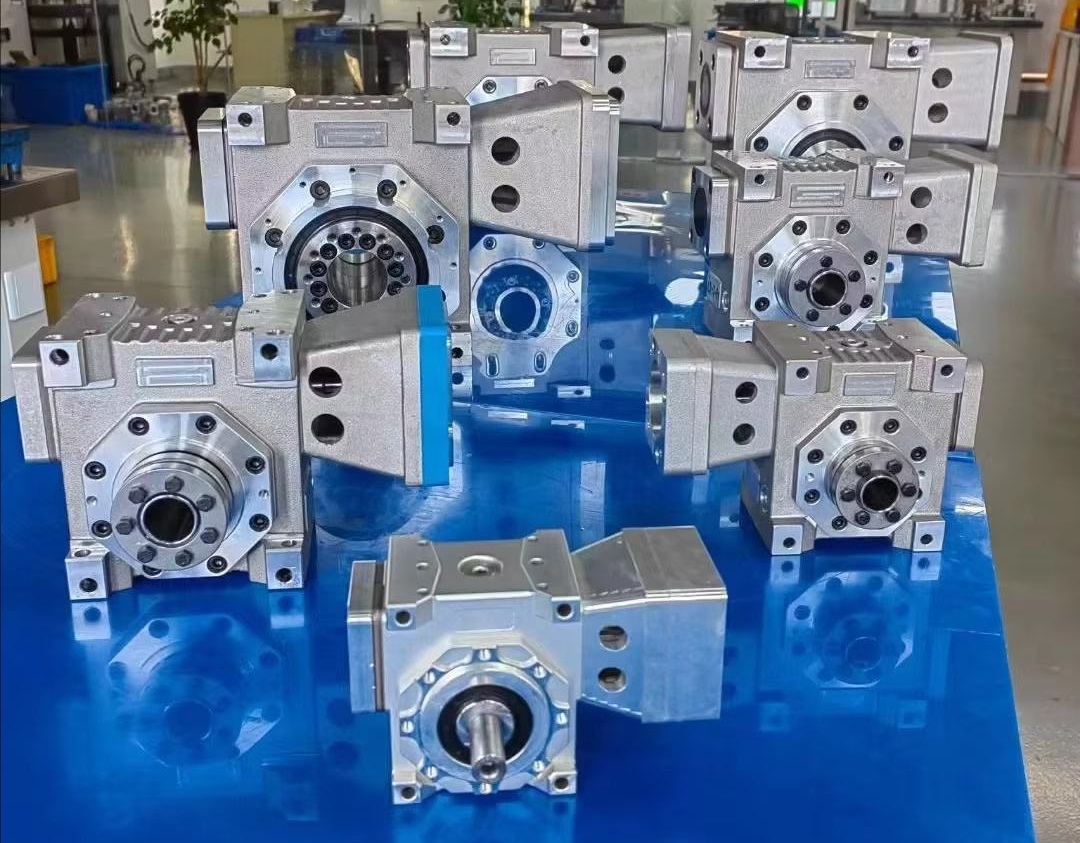
Worm gear reducer is a classic staggered-shaft power transmission device that achieves speed reduction and torque amplification through the meshing of the worm and the worm wheel, making it a widely used transmission equipment in the industrial field.
Core Features
Large Reduction Ratio: A single-stage transmission can achieve a reduction ratio ranging from 7.5 to 100, with a compact structure that greatly saves installation space.
Reverse Self-Locking: When the lead angle of the worm is smaller than the equivalent friction angle, power can only be transmitted from the worm to the worm wheel, and reverse driving is impossible, which can prevent loads in hoisting scenarios from accidental falling.
Smooth & Low-Noise Operation: The meshing process is continuous and progressive, with minimal impact, vibration and noise, making it suitable for scenarios requiring quiet operation.
Reliable Material Configuration: The worm is usually made of 45# steel through carburizing and quenching treatment, with the tooth surface hardness reaching above HRC60. The worm wheel is mostly made of wear-resistant tin bronze, which balances excellent wear resistance and mechanical properties.
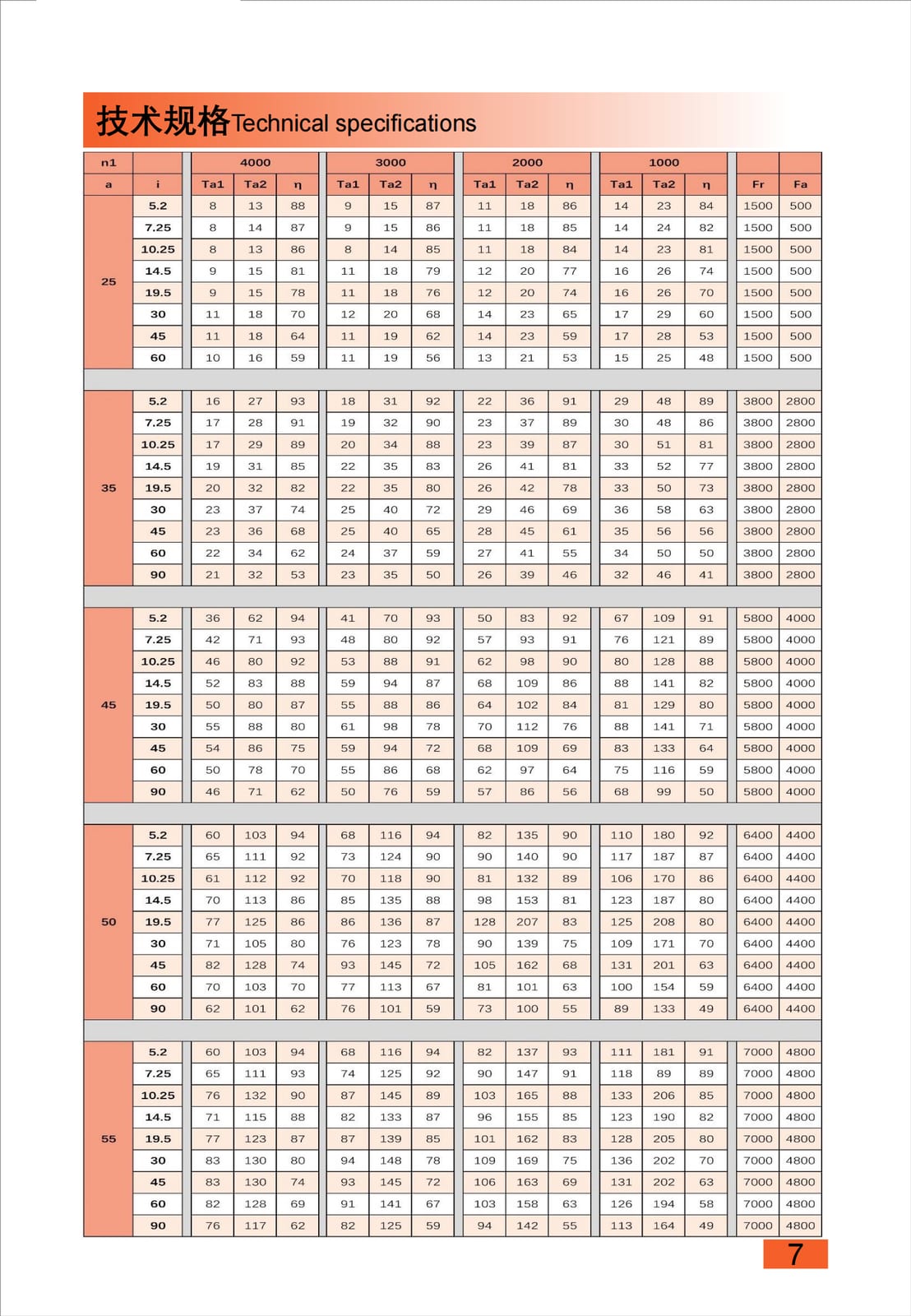
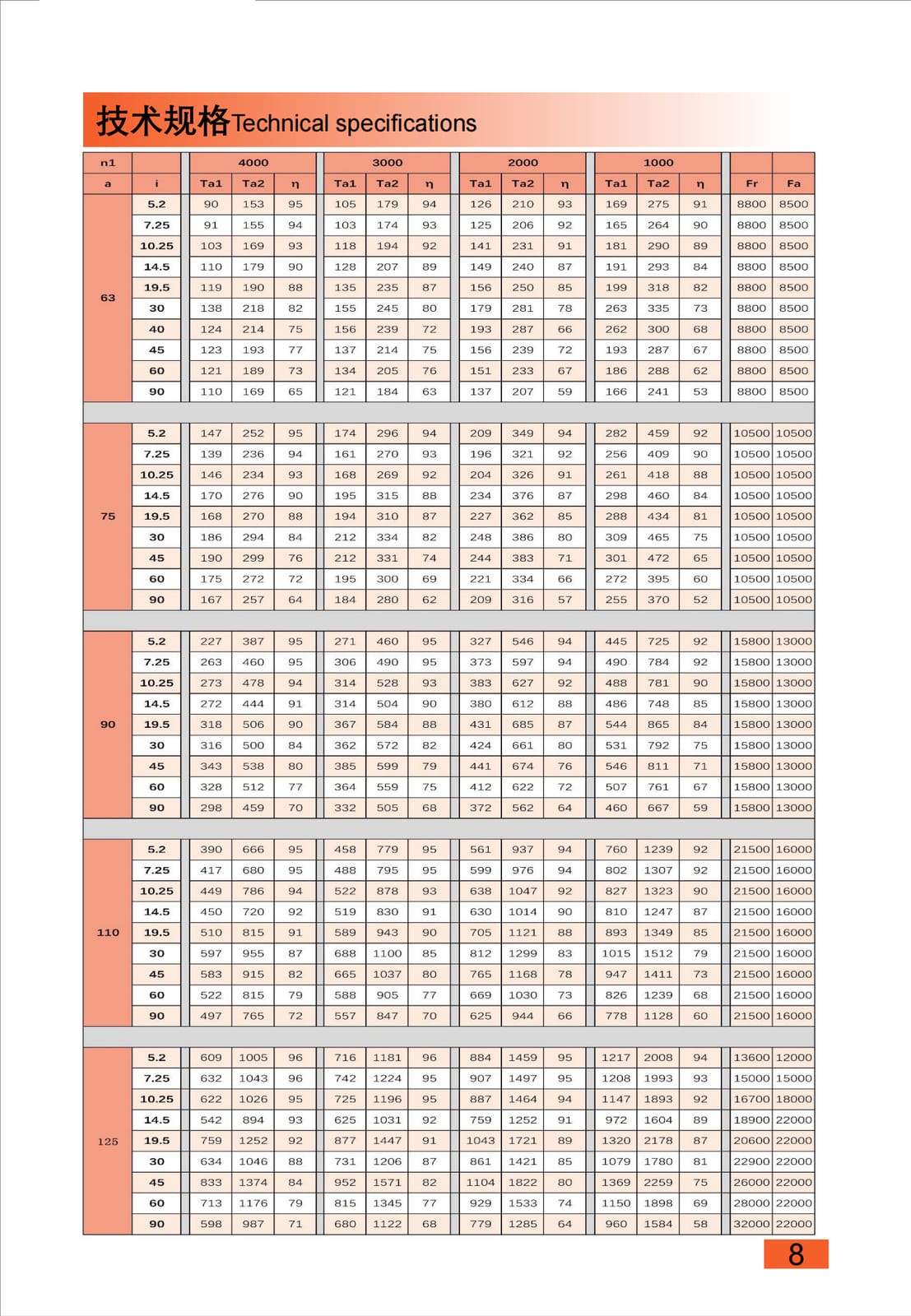
Transmission Efficiency: The efficiency of conventional products ranges from 30% to 80%. Due to the sliding friction characteristic, it is prone to heat generation during operation, so proper heat dissipation and lubrication maintenance are required.
Typical Application Scenarios
It is widely applicable to various working conditions requiring large torque and low-speed output, including hoisting and lifting equipment, mixing machinery, conveyor lines, metallurgical and mining equipment, machine tool transmission mechanisms, automated production lines, etc., and has a large number of applications in metallurgy, chemical, shipbuilding, light industry and other industrial fields.
Categories: Worm gear & Reducer